Randomize with 2 tumors

This experimental setup utilizes a murine model with bilateral subcutaneous tumor implantation for preclinical oncology studies, where each subject bears two distinct tumor sites: one on the left flank and one on the right flank. This model is critical for evaluating novel therapies in drug development.
Due to intrinsic biological variability and microenvironmental factors, these neoplastic lesions often demonstrate heterogeneous growth kinetics. This results in significant inter-tumor volume variability at the initiation of therapeutic intervention. Commonly observed patterns include:
- Asymmetric growth with predominant left flank tumor burden;
- Asymmetric growth with predominant right flank tumor burden;
- Symmetric growth with comparable bilateral tumor volumes.
Given that treatment efficacy is strongly correlated with initial tumor burden, a critical experimental design consideration emerges for accurate and robust study outcomes:
How to optimally stratify experimental subjects with bilateral tumors into treatment cohorts to ensure equivalent mean tumor volumes across both tumor sites, thereby minimizing inter-group variability?
Traditional randomization (random group assignment) is often suboptimal for preclinical studies with low sample sizes (typically <12 animals/group). Achieving correct group balancing, especially with multiple variables like bilateral tumor volumes, presents a complex challenge with a vast number of potential combinations to test. Optimized balancing, however, significantly enhances experimental power and the reliability of results.
Comparative Analysis of Group Homogeneity
Below is a comparative analysis of group homogeneity achieved through balancing optimization:
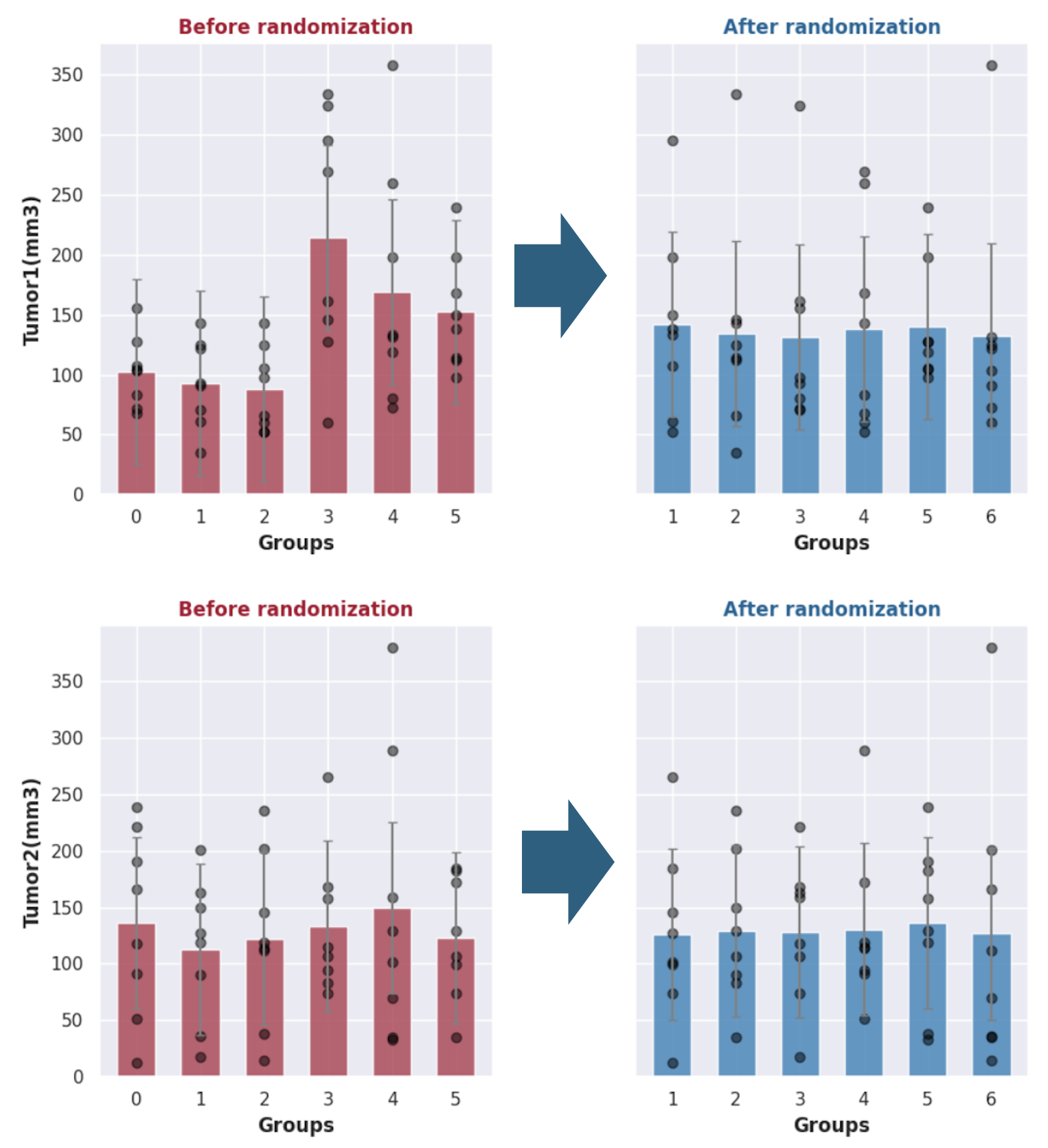
The data demonstrate significantly improved inter-group homogeneity on both tumors compared to manual randomization. This optimization is key for reliable bilateral tumor studies.